

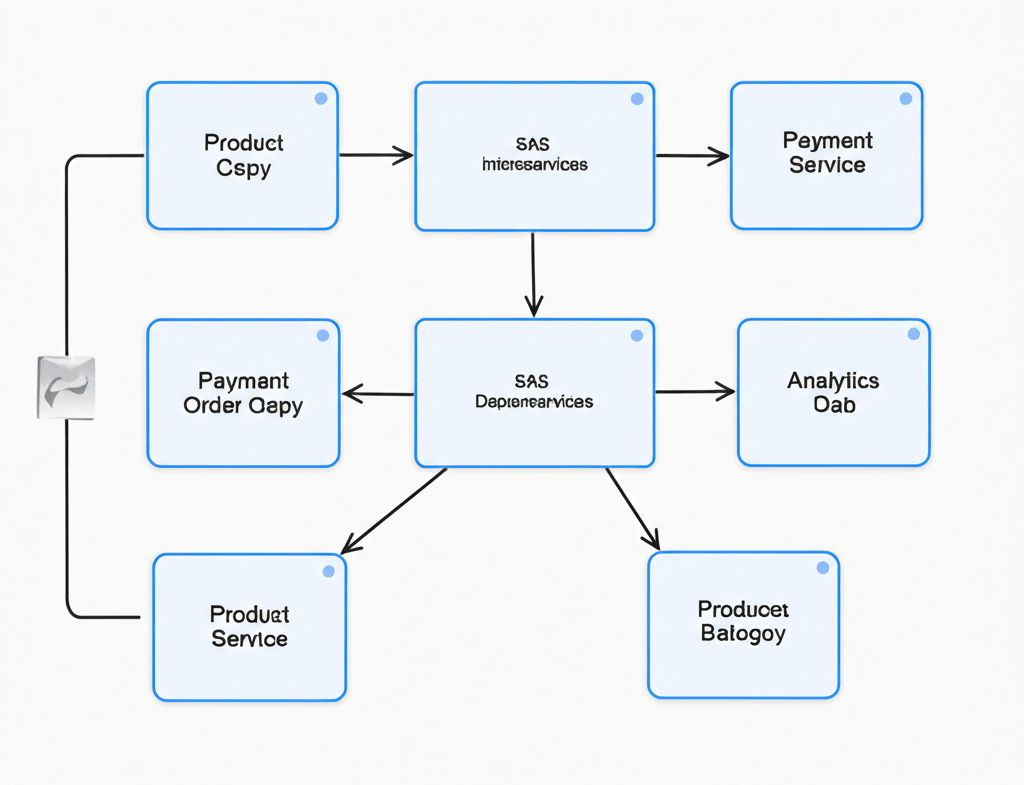
As applications grow in complexity and user base, traditional monolithic architectures often struggle to scale efficiently. Microservices architecture addresses these challenges by breaking applications into independently deployable, loosely coupled services.
What Are Microservices?
Microservices are small, autonomous services designed around specific business capabilities. Each service runs independently, communicates via APIs, and can be scaled without affecting the entire system.
Service Isolation
Independent Scaling
Decentralized Development
Designing for Scalability
Successful microservices architectures rely on clear service boundaries, stateless design, and efficient inter-service communication. Using asynchronous messaging and API gateways ensures resilience and flexibility at scale.
Deployment & Orchestration
Containerization and orchestration platforms like Docker and Kubernetes simplify deployment, scaling, and management of microservices. Automated CI/CD pipelines enable rapid releases while maintaining reliability.
Monitoring & Fault Tolerance
Observability is critical in distributed systems. Centralized logging, metrics, and distributed tracing help teams detect failures early and maintain system health. Circuit breakers and retries further enhance fault tolerance.